


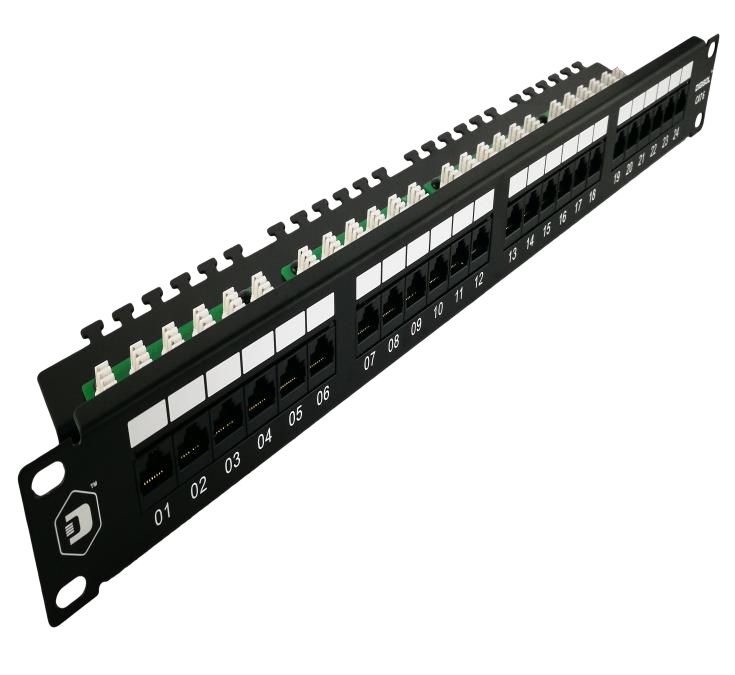
A patch panel is a crucial component in networking and telecommunications infrastructure that facilitates the organization, management, and connectivity of network cables. Here’s a comprehensive overview of patch panels:
Definition and Purpose:
A patch panel serves as a central point where network cables are terminated and connected. It allows network administrators to quickly and efficiently manage and troubleshoot network connections without the need to access individual devices or cables directly.
Key Features and Components:
- Ports and Interfaces:
- Patch panels typically have multiple ports (also known as jacks or sockets) where cables from network devices such as computers, switches, routers, and servers are terminated.
- Ports are usually grouped in rows and labeled for easy identification and organization.
- Construction:
- Made from durable materials like metal or plastic to provide stability and protection for cable terminations.
- Some high-density patch panels are designed to accommodate a large number of ports in a compact form factor.
- Labeling:
- Each port on the patch panel is usually labeled with numbers or other identifiers corresponding to specific network locations or devices.
- Labels aid in identifying and tracing connections, which simplifies network maintenance and troubleshooting.
- Cable Management:
- Patch panels include features for organizing and securing cables, such as cable management bars, loops, or ties.
- Proper cable management reduces clutter, minimizes cable strain, and facilitates airflow in server rooms or network closets.
- Types of Patch Panels:
- Ethernet Patch Panels: Used in LAN (Local Area Network) environments to connect Ethernet cables.
- Fiber Optic Patch Panels: Used for terminating and connecting fiber optic cables in data centers and telecom networks.
- Coaxial Patch Panels: Used in cable TV and broadband applications for connecting coaxial cables.
Installation and Configuration:
- Mounting: Patch panels can be rack-mounted (19-inch standard) or wall-mounted, depending on the installation environment.
- Termination: Cables are terminated onto the back of the patch panel using punch-down blocks, keystone jacks, or other termination methods.
- Patch Cords: Short Ethernet or fiber optic patch cords are used to connect the front ports of the patch panel to network devices or switches.
Benefits of Using Patch Panels:
- Centralized Management: Simplifies network administration by providing a structured and organized approach to cable management.
- Flexibility: Allows for easy reconfiguration of network connections without disturbing the devices connected to the network.
- Reduced Downtime: Facilitates quick identification and resolution of connectivity issues, minimizing network downtime.
- Scalability: Easily expandable to accommodate additional network connections as the network grows.
Considerations:
- Compatibility: Ensure compatibility with existing network equipment and cable types (e.g., Cat 5e, Cat 6, fiber optic).
- Quality: Choose patch panels from reputable brands that adhere to industry standards for performance and reliability.
- Future-proofing: Consider future network expansion needs when selecting the size and type of patch panel.
Popular Brands:
- Panduit
- Leviton
- Tripp Lite
- Monoprice
- Cisco
Conclusion:
Patch panels are essential components in network infrastructure, providing a structured and efficient method for managing and organizing network connections. Whether in small office environments or large data centers, patch panels play a critical role in ensuring reliable network performance and ease of maintenance. Understanding their features, installation methods, and benefits helps network administrators make informed decisions when planning and implementing network connectivity solutions.


Reviews
There are no reviews yet.