


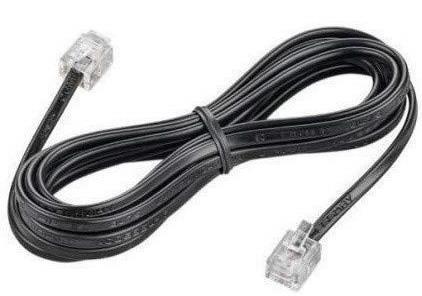
A telephone cable is used to connect a telephone or similar device to a telephone jack or wall outlet, allowing for voice communication over a landline network. Here are the key aspects of telephone cables:
Types of Telephone Cables:
- RJ11 Cable: This is the most common type of telephone cable. It typically has four wires and uses an RJ11 connector, which is a modular connector with a plastic clip.
- RJ12 Cable: Similar in appearance to RJ11, but with six wires. It’s less common for standard telephone connections but may be used in special configurations or with certain equipment.
- RJ45 Cable: While primarily used for Ethernet networks, RJ45 cables can also carry telephone signals in some applications. They have eight wires and are larger than RJ11 or RJ12 connectors.
Usage and Connectivity:
- Connecting Devices: Telephone cables connect telephones, fax machines, modems, or other devices with telephone capabilities to the telephone network through a wall jack or outlet.
- Types of Connections: Telephone cables can be used for various connections, such as from a telephone device to a wall jack (straight-through cable) or to connect two telephone devices directly (cross-over cable).
Important Considerations:
- Length: Ensure the cable length is sufficient for your needs. Longer cables may introduce signal degradation over long distances.
- Quality: Use high-quality cables to minimize interference and ensure clear voice communication.
- Compatibility: Verify the type of connector (RJ11, RJ12, or RJ45) and wiring configuration (straight-through or cross-over) based on your specific equipment and setup requirements.
Installation Tips:
- Check Connections: Ensure connectors are securely plugged in to prevent connection issues.
- Labeling: Label cables and connections for easy identification during troubleshooting or reconfiguration.
- Protection: Avoid bending or damaging cables, especially at connector ends, to maintain signal integrity.
Telephone cables are essential for establishing reliable voice communication over landline networks. They are straightforward to use and provide a stable connection for traditional telephone services in homes, offices, and other environments.



Reviews
There are no reviews yet.